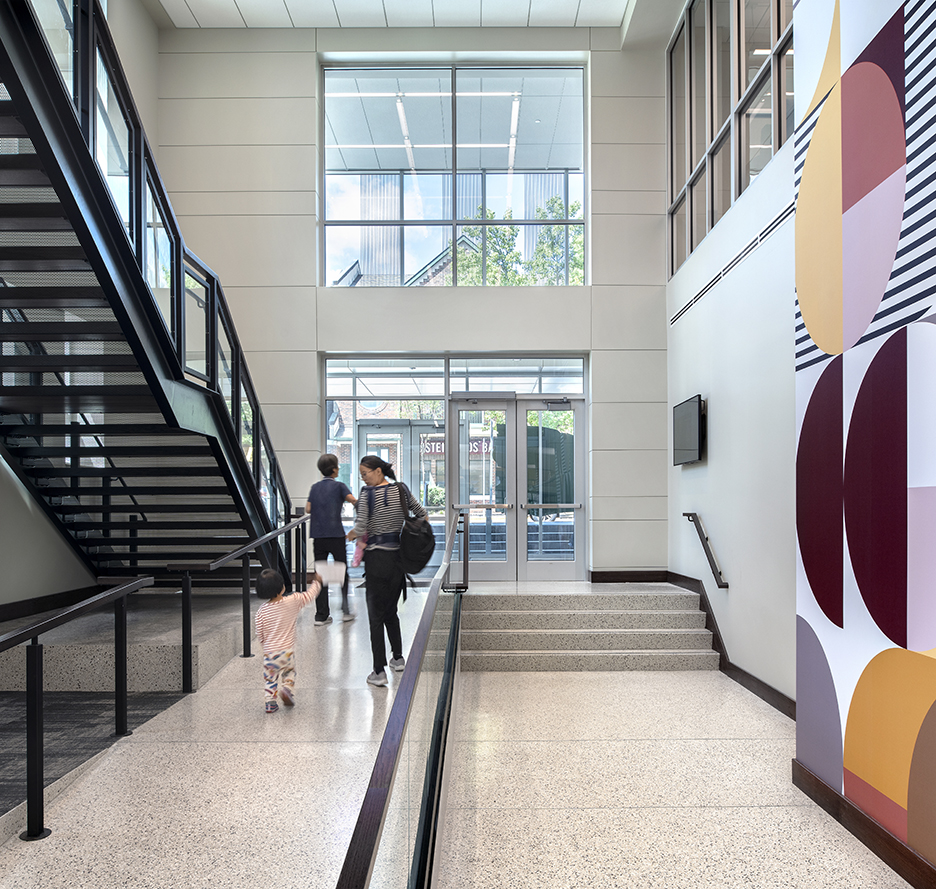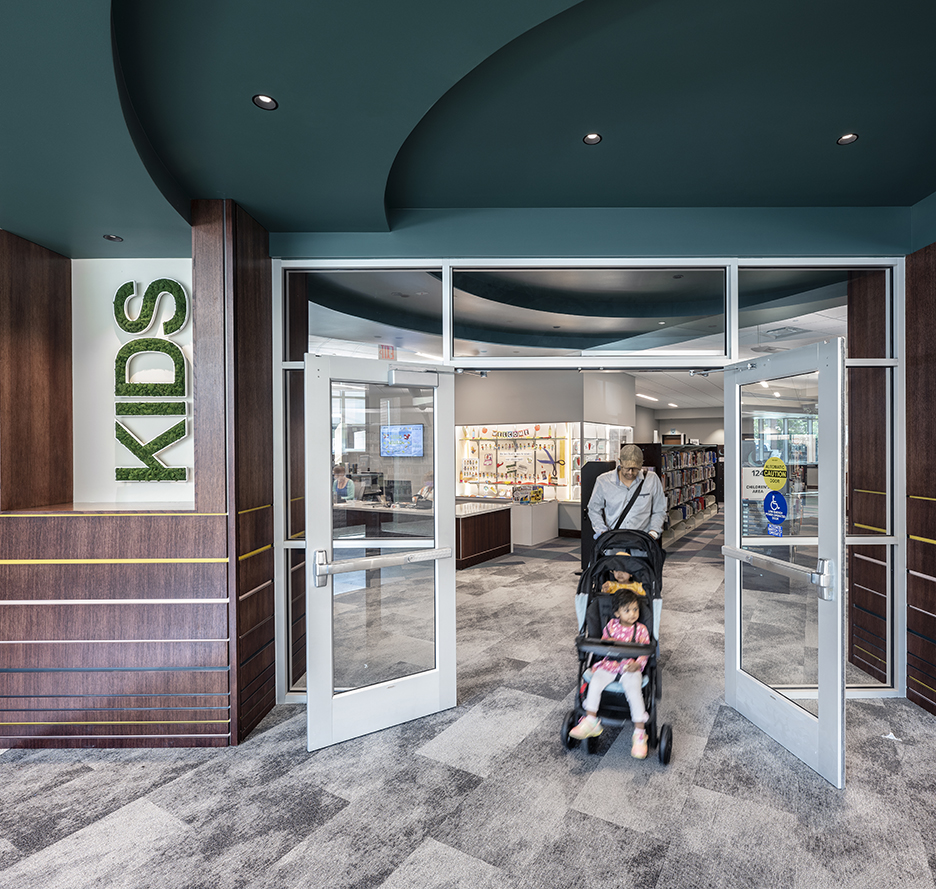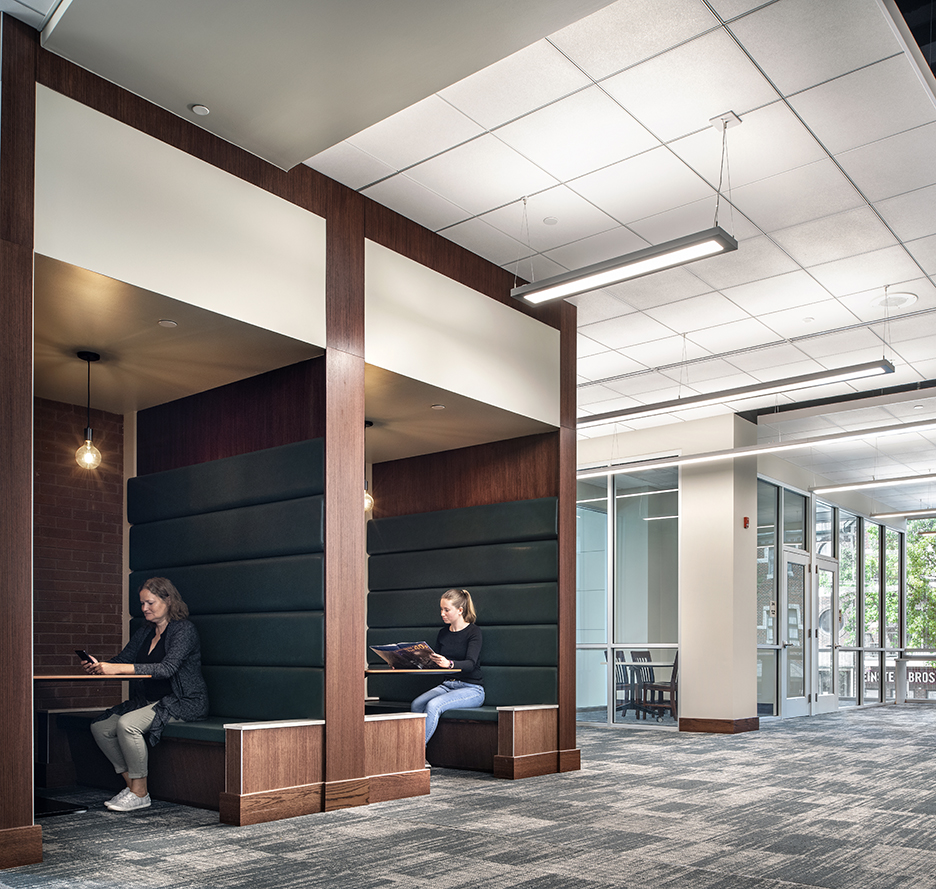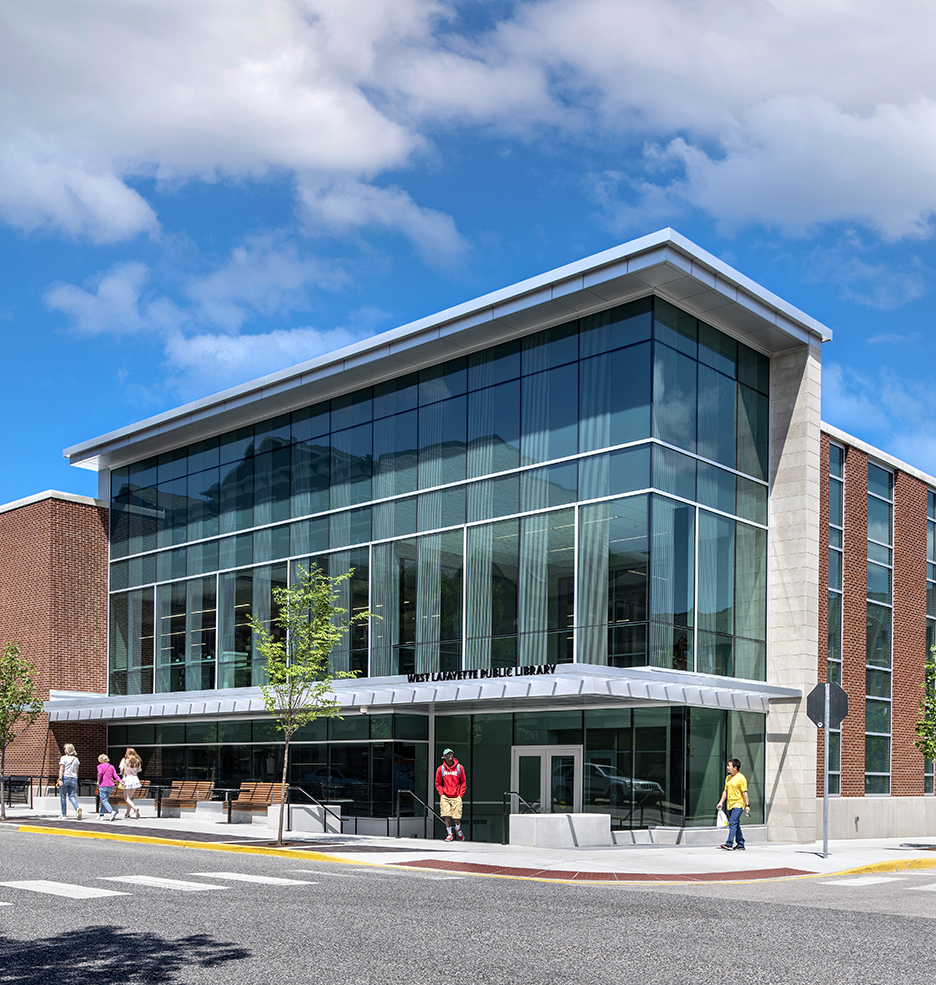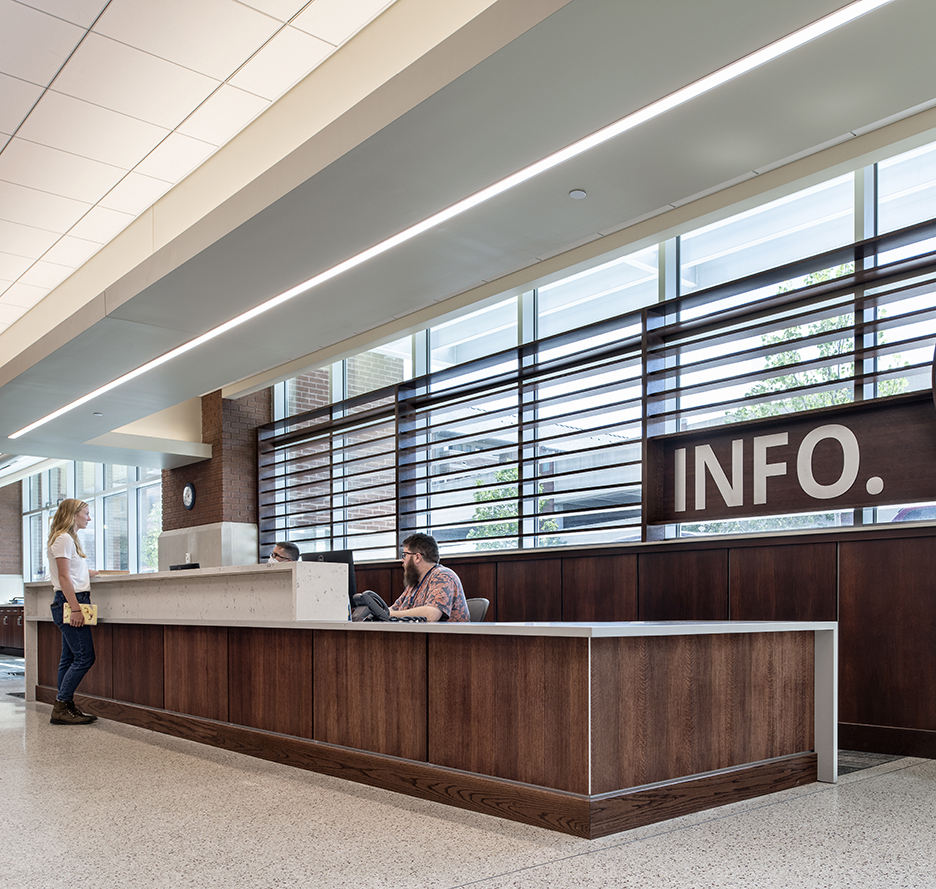

The design was informed by a feasibility study that our design team conducted with the library administration and staff, the public, and the board. It became clear that this new design project should help the facility itself evolve to meet the library’s programmatic and functional progress, and answering to a thriving city that expects to experience the library in different ways.
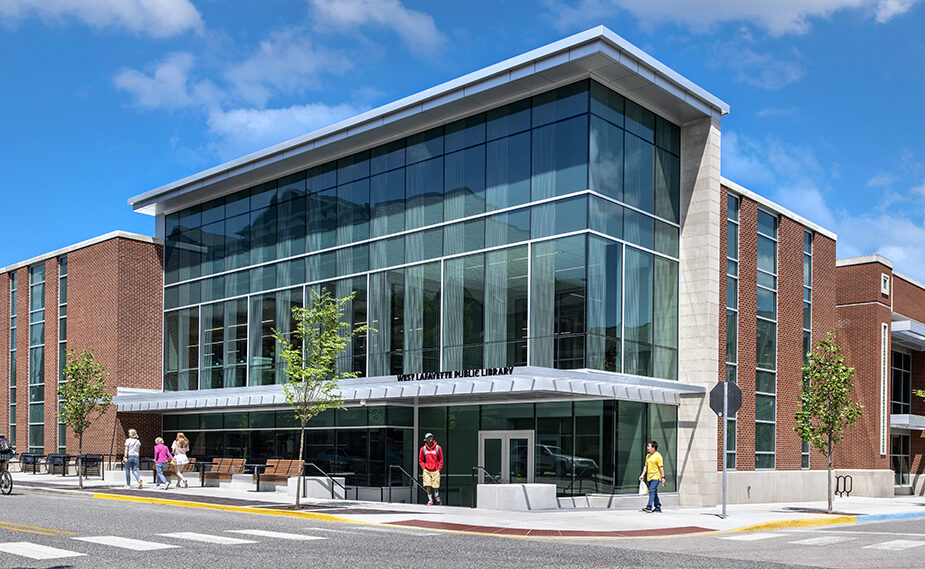
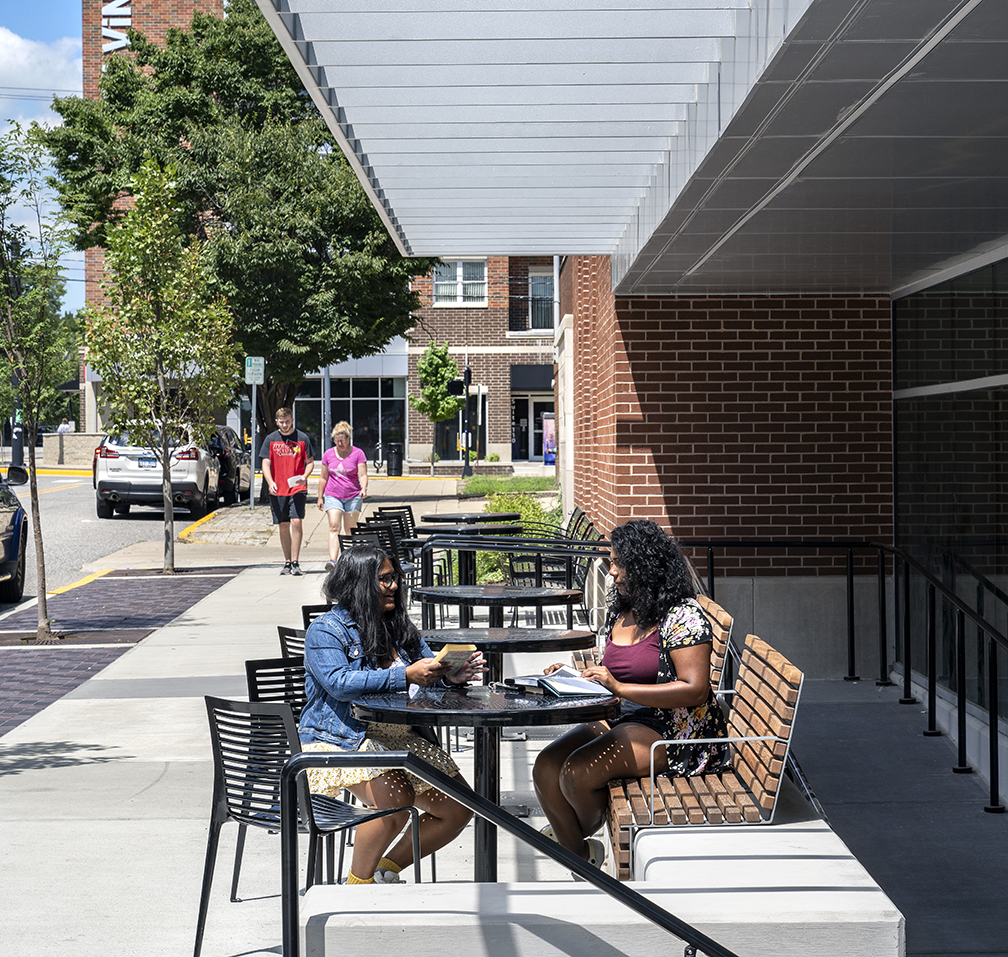
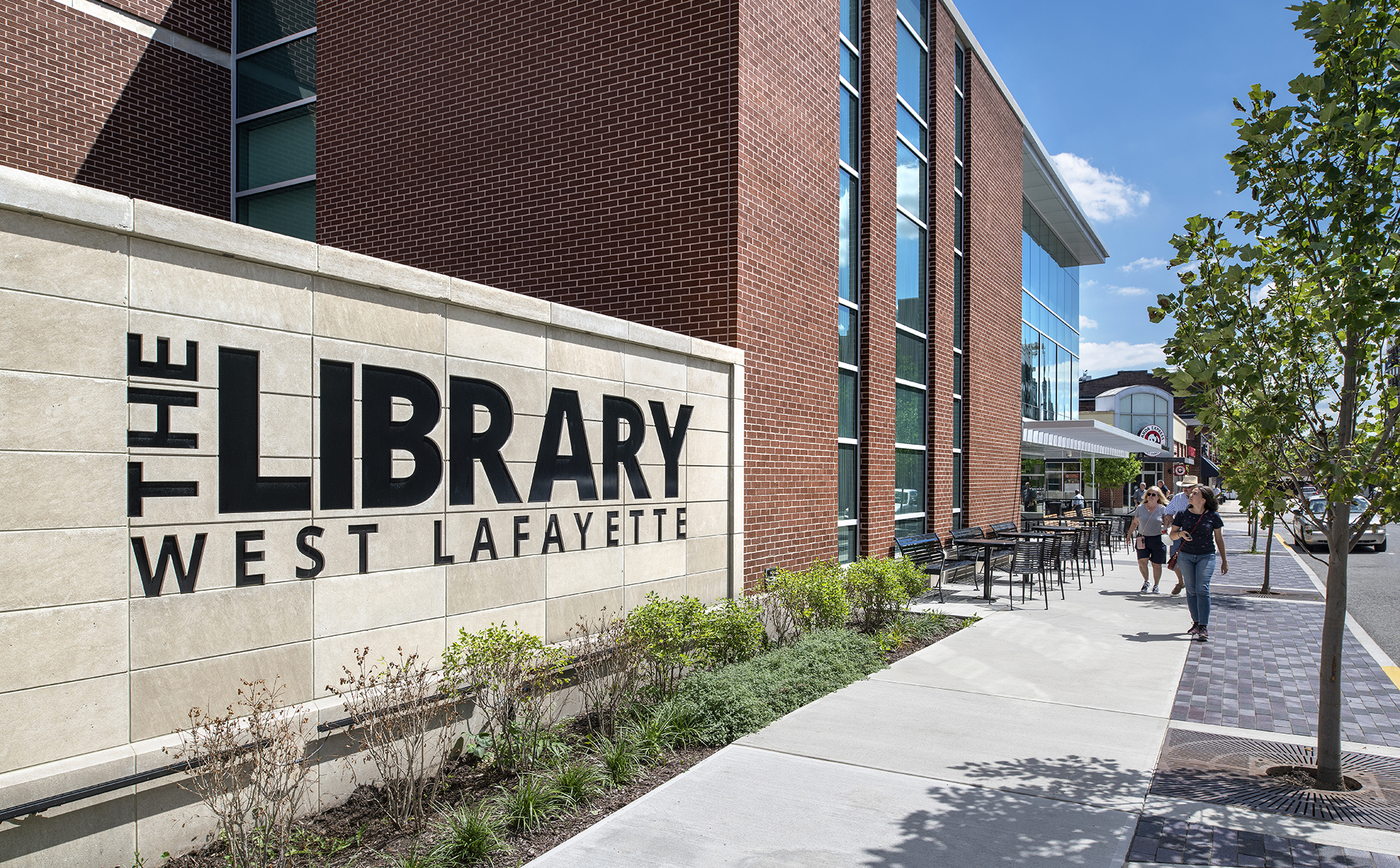
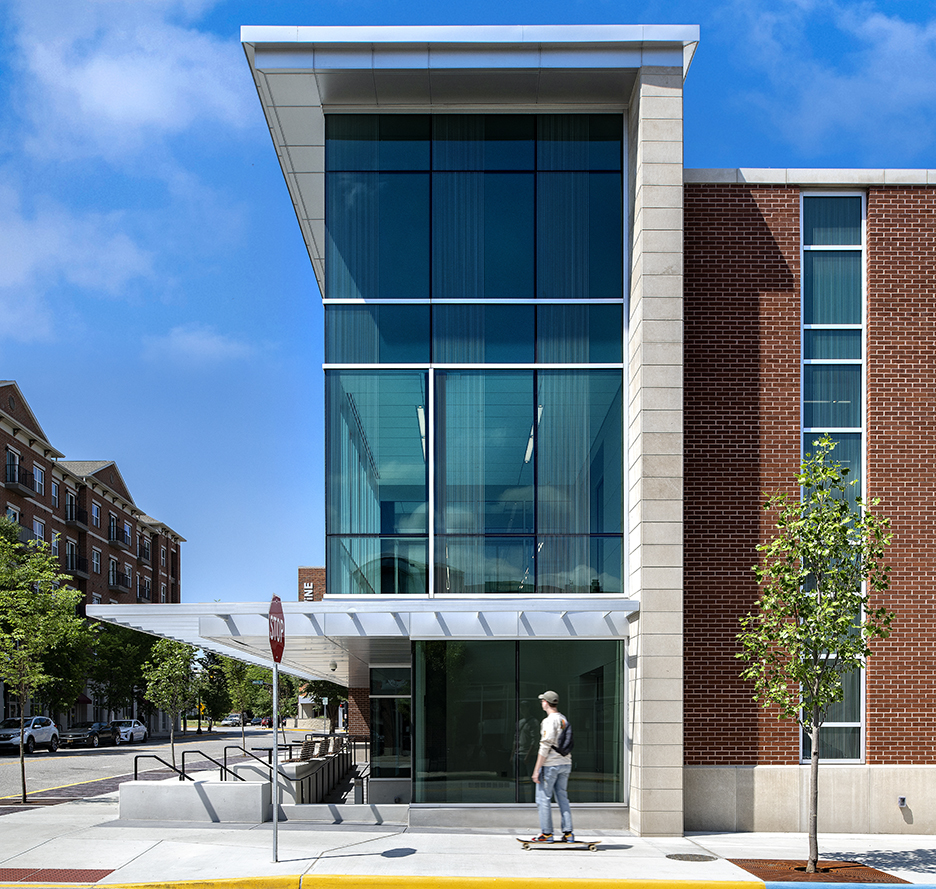
The exterior of the building addition, like the original library, is a steel framed structure clad in brick and limestone masonry, in a style complementary to the existing building language. The site of this project created two main facades. The south façade transitions the existing structure to the new addition, while the west façade creates a second ‘main’ entrance that serves as an improved gateway to the nearby campus. This strengthens the community connection, facilitating outdoor, urban experiences along three sides of the building.
A portion of the addition rises higher than the original roofline to give the library a distinctive presence along Northwestern Avenue and to balance the relatively narrow footprint of the addition. The height was important to match the context of the surrounding buildings, in an area where high-rise apartment buildings—developed to meet the housing demand for Purdue University students—have begun to change the architectural identity of the area.
Modern Library Needs
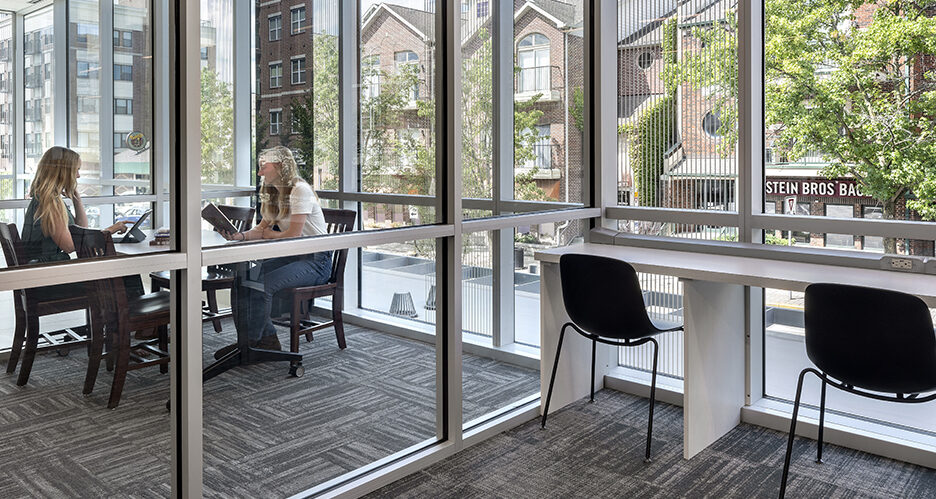
Today this library is a place where patrons hold meetings, study with tutors and professors, access technology for personal devices, attend programming for all ages and research their family history. Important design features such as flexibility with spatial relationships and furniture, visibility, quiet study areas, infrastructure for technology needs, effective staff areas and security are all key to the success of this modern library.